01
Karnak
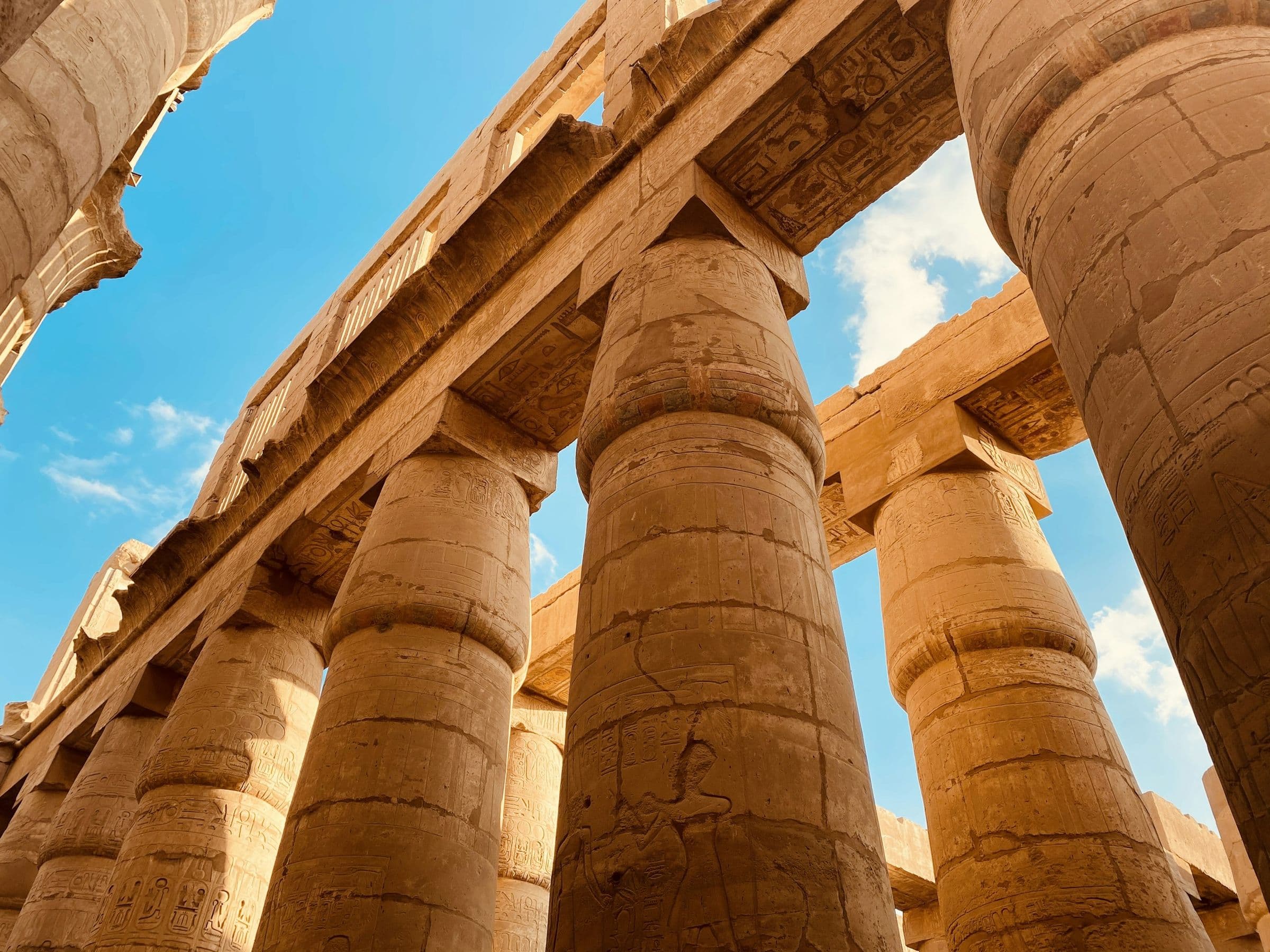
The largest temple complex of ancient Egypt, with its great hypostyle hall of 134 papyrus columns.
02 · Karnak · Luxor Temple · West Bank
Monumental temples on both banks of the Nile, from the great complex of Karnak to the terraces of Hatshepsut.
The temples of Upper Egypt
The temples along the Nile were built on a scale that is still hard to comprehend. The greatest of them all is the vast temple complex of Karnak in Luxor, a forest of columns built and rebuilt over two thousand years.
Across the river, the West Bank holds the Theban necropolis and the terraced temple of Queen Hatshepsut, set against the cliffs of the desert.
Highlights
The largest temple complex of ancient Egypt, with its great hypostyle hall of 134 papyrus columns.
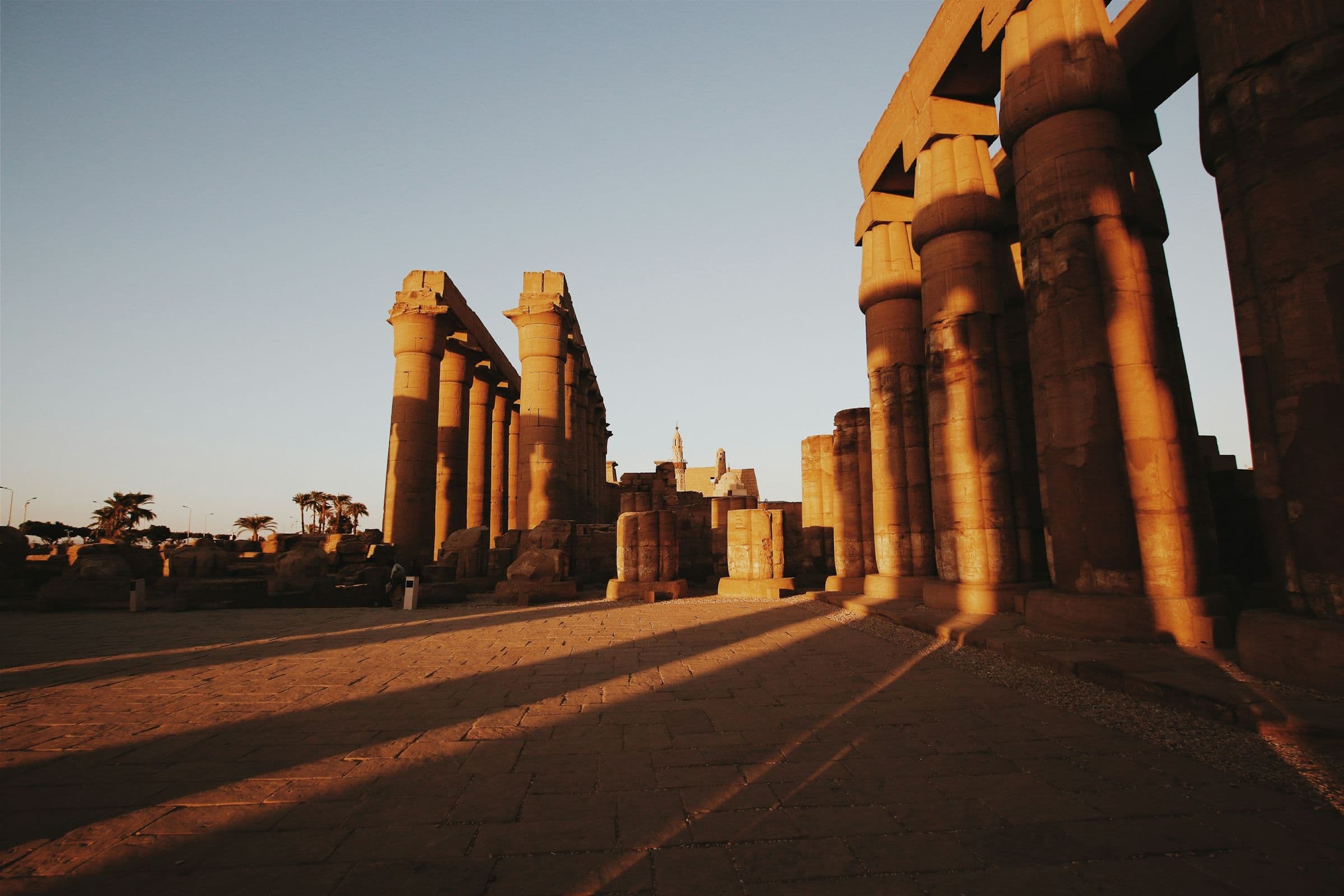
A temple in the heart of the modern city, at its most atmospheric as the evening light turns the stone gold.
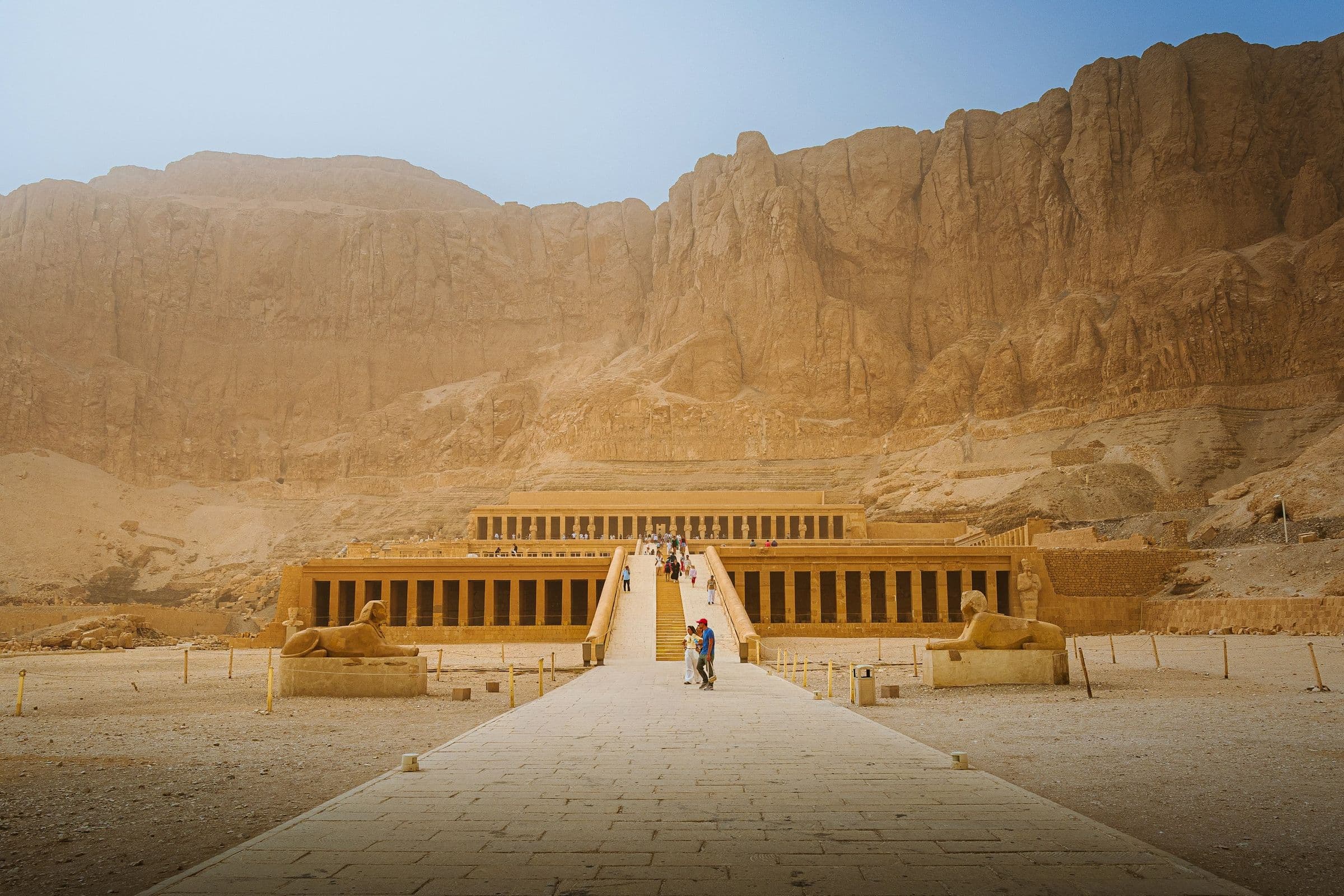
The mortuary temple of Egypt’s great female pharaoh, rising in terraces beneath the Theban cliffs.
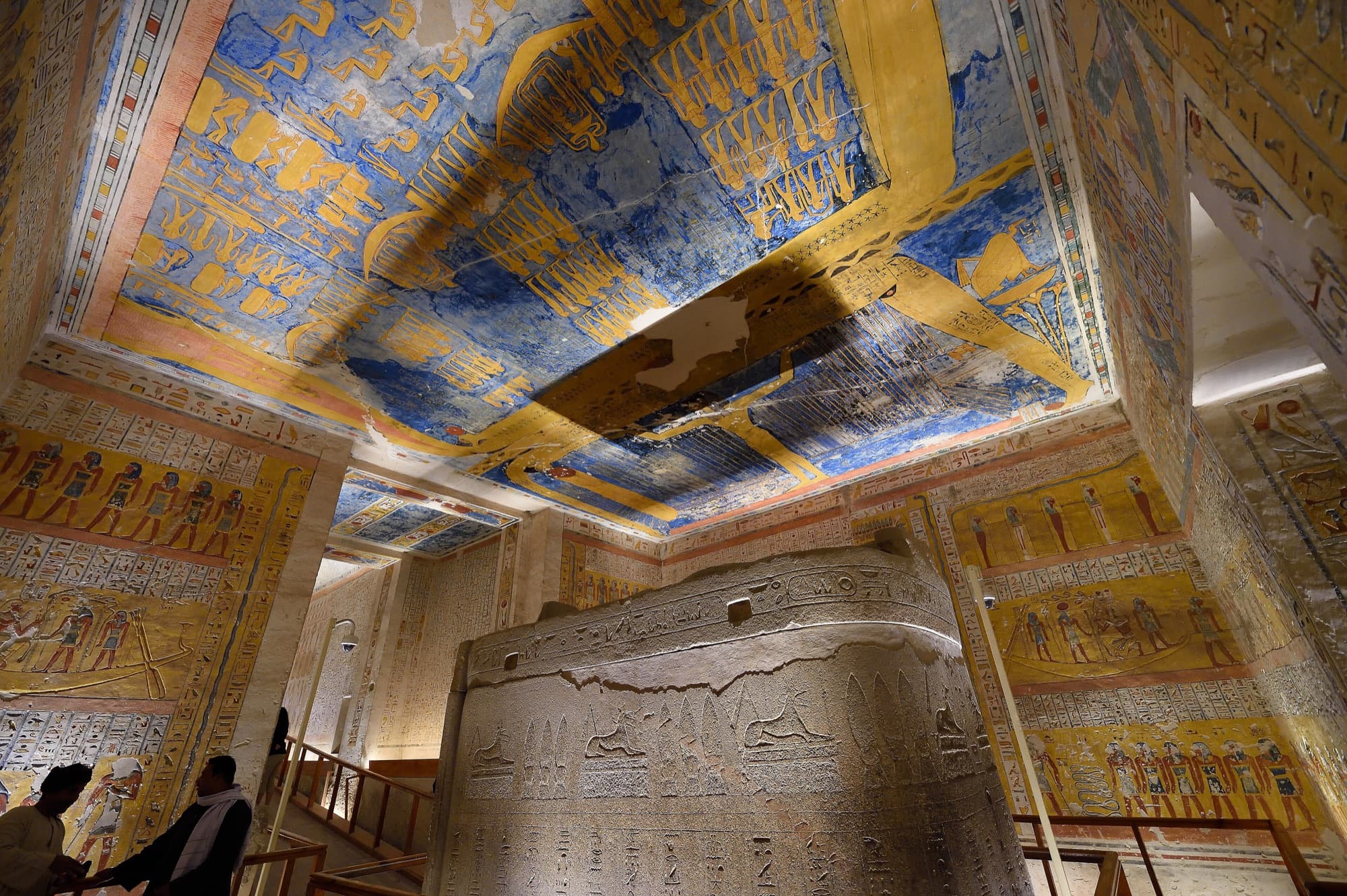
The royal necropolis of the New Kingdom, its tombs painted with the journey of the sun through the night.
The Luxor guide
Temples and museums on the East Bank, mortuary temples and royal tombs on the West Bank, and lesser-known sites for travellers who want to go further.
The living city
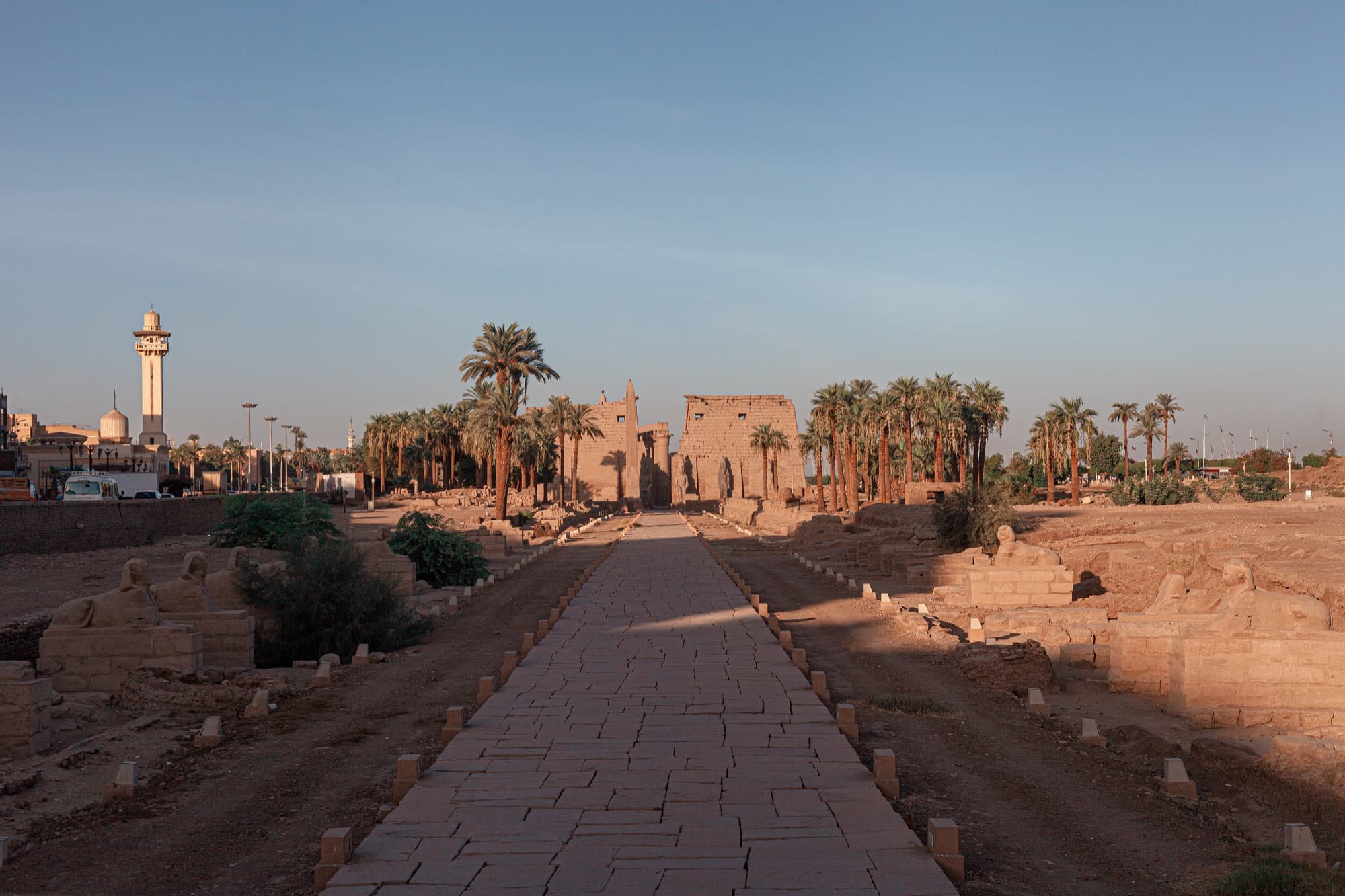
The Great Hypostyle Hall, the Sacred Lake, obelisks and the Open-Air Museum. A sound and light show may run in the evening.
Colossal statues of Ramses II, colonnades and the Abu Haggag Mosque within the precinct. Beautiful in the evening.
The ceremonial road between Karnak and Luxor Temple, lined with sphinxes and ram-headed statues.
A small, beautifully presented collection of finds from ancient Thebes.
How the ancient Egyptians prepared the dead for eternity: materials, tools and beliefs.
Across the river
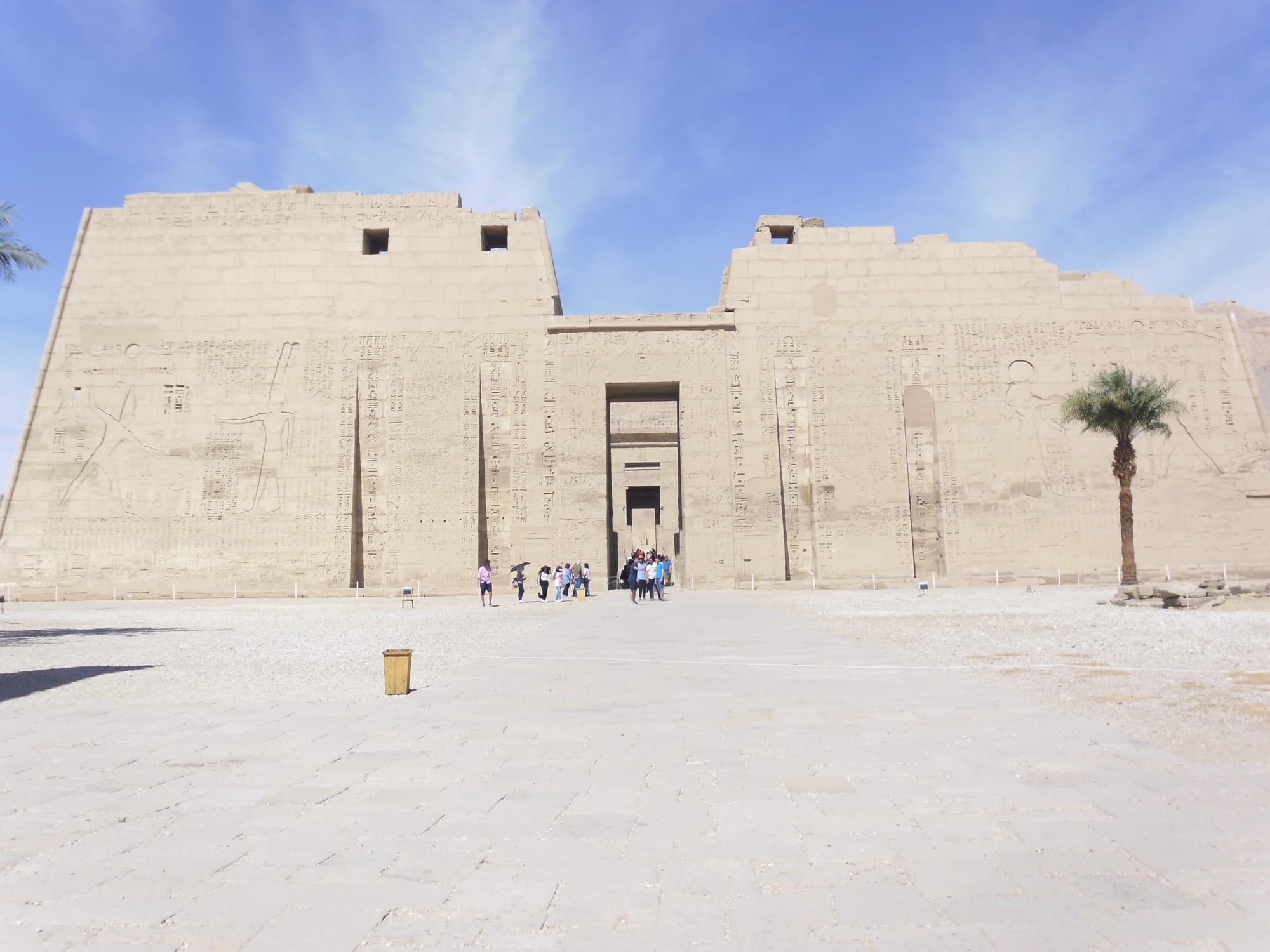
The terraced temple at Deir el-Bahari, set against the cliffs.
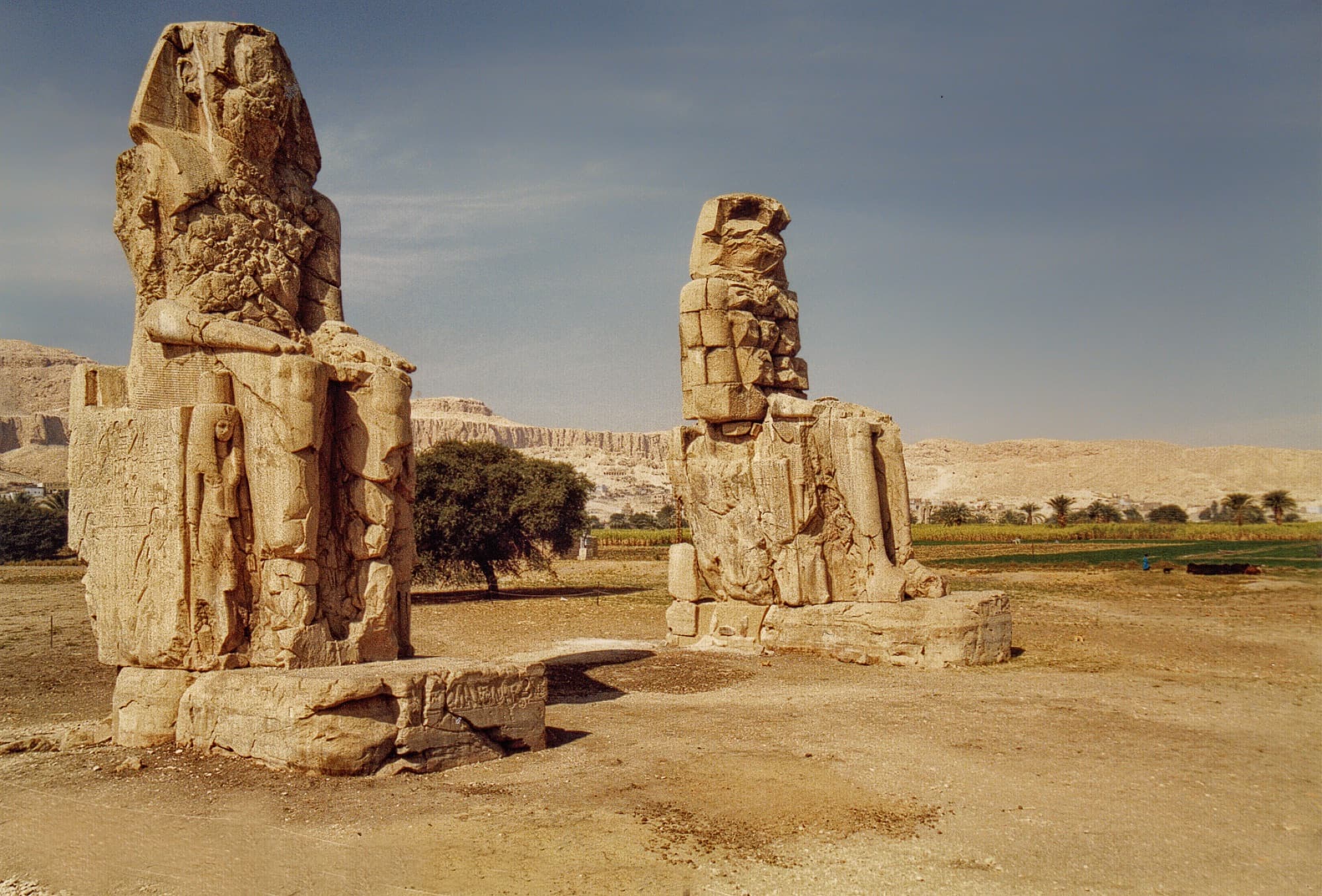
Two giant seated statues from the temple of Amenhotep III.
The temple of Ramesses III, with great gateways and some of the finest reliefs in Egypt.
The mortuary temple of Ramesses II, with fallen colossi and historical reliefs.
The village and painted tombs of the artisans who built the royal tombs.
Kings & queens
The New Kingdom royal necropolis. The standard ticket covers a selection of tombs; Tutankhamun (KV62), Seti I (KV17) and Ramesses VI (KV9) need their own.
Ramesses III, Ramesses IV, Merenptah, Amenhotep II, Thutmose III and Horemheb, depending on which are open on the day.
Tombs of queens and royal children, including the vividly painted tomb of Nefertari (QV66), visited on a special ticket.
For the curious
Scenes of farming, crafts and daily life in the tombs of officials and scribes: Nakht, Mennah, Rekhmire, Ramose and Sennedjem.
Wider necropolis areas for specialist, tomb-focused journeys.
The remarkably preserved temple of Hathor, north of Luxor in Qena, as a separate day trip.
The Temple of Khnum at Esna and smaller temple sites south of Luxor, as specialist excursions.
Suggested visit times are estimates. Opening hours, tickets and access change, so every visit is confirmed before it is booked.
Your way
Planning Luxor
Karnak and Luxor Temple are about 2.5 km apart on the East Bank. The West Bank is reached by bridge or boat, and the route is planned to avoid doubling back.
Comfortable shoes, water, steps, narrow passages and heat. Open tombs rotate for conservation, so the selection is confirmed close to the date.
Possible at dawn, but always subject to weather, permits and the operator. Never promised before it is confirmed.
Qualified guides in your language. Photography rules and charges differ from site to site.
Experiences
A suggested three-day programme, or a Luxor visit arranged around your own dates and interests.
Three days across both banks of the Nile: Karnak and Luxor Temple, the Valley of the Kings and Hatshepsut, then Medinet Habu and the tombs of the nobles.
View detailsKarnak, Luxor Temple and the West Bank, arranged around your own interests and travel plans.
View detailsContinue the journey